
Wood vs. Plastic Lazy Susans: Which Material Is Best for My Cabinet?
When buyers search for the best lazy susan for a kitchen cabinet, they are usually deciding between two materials: wood and polymer. Both can solve a storage problem. The better choice depends on where the cabinet is located, how hard the system will be used, how visible the shelves are, and whether the project prioritizes premium appearance, moisture resistance, or budget.

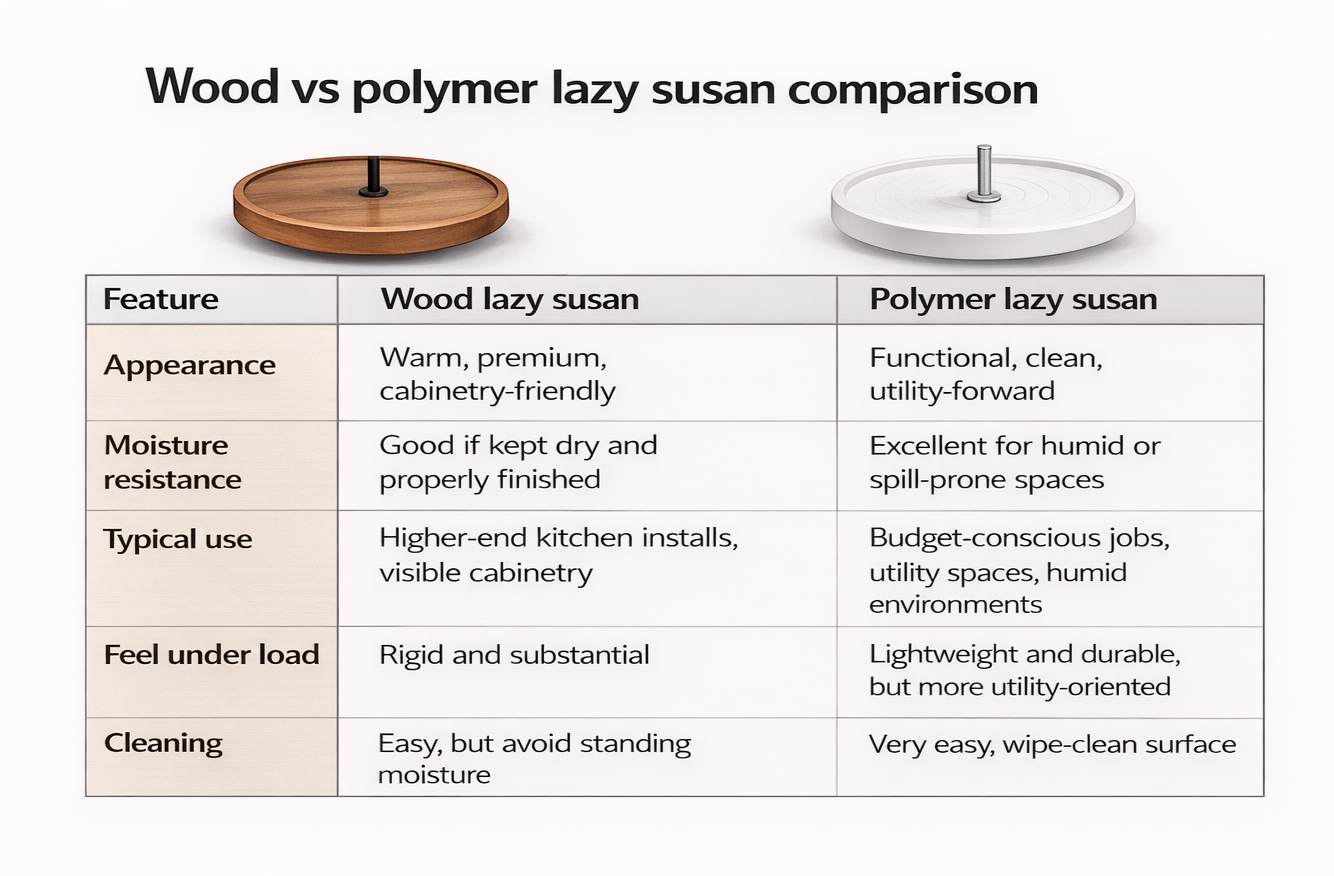
Wood Lazy Susan Benefits:
-Premium look that feels more integrated with cabinetry
-Rigid shelf feel under normal kitchen loads
-Strong fit for high-end remodels and contractor-grade installs
-Clear-coated wood construction is attractive in visible storage zones
Polymer Lazy Susan Benefits:
-Moisture resistance is a major plus in humid or spill-prone environments
-Lighter weight can simplify installation and handling
-Usually more budget-friendly than wood
-Easy-to-clean surfaces work well in utility or everyday family kitchens
Best use cases for wood
Choose wood when the cabinet is highly visible, the finish level matters, and the goal is a premium built-in look. This is especially true for upscale kitchen remodels, custom cabinetry, and projects where the cabinet accessories should feel consistent with the millwork.
Best use cases for polymer
Choose polymer when moisture, cleanup, or budget is the bigger concern. Plastic can make sense in family kitchens, utility spaces, and projects where practical performance matters more than matching the visual language of wood cabinetry.
Common mistake to avoid
Do not treat polymer as a low-quality substitute by default or wood as the automatic premium answer in every room. The right question is not “Which material is better?” but “Which material is better for this cabinet, this environment, and this client?”
FAQ
Is a wood lazy susan stronger than a polymer lazy susan?
Wood often feels more rigid and premium, but both materials can be durable when correctly specified and kept within the listed product rating.
Is polymer better for humid kitchens?
Yes, polymer is usually the safer choice where moisture resistance is a priority.
Can I mix wood and polymer organizers in the same project?
Yes. Many projects use wood in highly visible kitchen zones and polymer in utility or less visible cabinets.
Conclusion
For premium kitchen design, a wood lazy susan is often the stronger aesthetic choice. For moisture resistance, easy cleanup, and value-focused installs, polymer deserves serious consideration. The best lazy susan material is the one that matches the cabinet location, the client’s priorities, and the real-world conditions of the project.